


Party game
Not That One
Ask yes-or-no questions, grab tokens, and dodge the secret one
- Set-up
- Under a minute
- Reading
- None
The quick verdict
Full verdict ↓Great for Children of about 5 to 9 who like quick, noisy games with parents and cousins
Think twice if You want a game with real strategy; it's about quick questions, sharp eyes and fast hands
How we rate it
Learning curve. Ask a yes-or-no question, then grab what the answer rules out. A five-year-old can follow it after one round, so it sits with UNO at 1 on our scale.
Luck & skill. Which token is chosen and how quickly the right questions come up is partly luck. Sharp questions, quick eyes and quick hands decide most rounds.
Interaction. Everyone grabs from the same spread of tokens at the same time, so you are always racing each other's hands.
Set-up. Tip the tokens out face up and spread them across the table, then the chooser marks a secret token in the booklet.
Reading. The tokens are pictures and the questions are spoken; only the rules are in English.
Learning curve: 1 = UNO or Connect 4; 3 = Catan; 5 = a heavy strategy game. These describe the experience, not an overall score.
Paid link · We may earn a commission, at no extra cost to you.
Is Not That One right for you?
Great if
- Children of about 5 to 9 who like quick, noisy games with parents and cousins
- Families who speak a mix of languages: the questions can be asked in any language
- Trips and get-togethers: the box is small and a round takes about five minutes
- Birthday return gifts from an Indian maker
Skip it if
- You want a game with real strategy; it's about quick questions, sharp eyes and fast hands
- Your family dislikes grabbing races, where the quickest hands win
- Your children are 10 or older and would rather play something longer
How Not That One plays
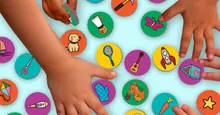
Spread all 100 tokens face up on the table; each one shows a different object. One player secretly chooses one token as the 'Not That One!' token and marks it in the mystery object booklet with the wipe-clean marker, so there is no arguing later.
- Time to teach: about 5 minutes.
- Reading and language: The tokens are pictures of everyday objects, so nobody reads during play. The questions and answers are spoken, so you can play entirely in Hindi, Tamil, Bengali or whatever mix of languages your family uses. Only the rules are in English.
A turn, step by step
- 1Choose
The caller secretly picks one of the 100 picture tokens and marks it in the booklet.
- 2Ask
The others take turns asking yes-or-no questions, such as 'Is it an animal?'. The caller answers only yes or no.
- 3Grab
After each answer, everyone races to grab the tokens the answer rules out. Grab the secret token by mistake and you hand back everything you collected that round.
- 4Win
The round ends when only the secret token is left; the most tokens wins the round, and the first to win five rounds wins the game.
The full explanation: how a game of Not That One goes
The other players take turns asking yes-or-no questions, such as 'Is it an animal?' or 'Can you eat it?', and the caller may answer only yes or no. After each answer, everyone races to grab as many tokens as they can that the answer rules out: if 'Is it an animal?' gets a 'No!', grab the animals.
Never grab the secret token: if you do, you hand back every token you collected that round. The round ends when only one token is left on the table, the secret one. Whoever collected the most tokens wins the round, and the first player to win five rounds wins the game.
For parents: take turns being the caller, and for a shorter game play to three round wins instead of five. Younger children can team up with an adult, and the questions are good practice in describing colours, shapes and categories out loud.
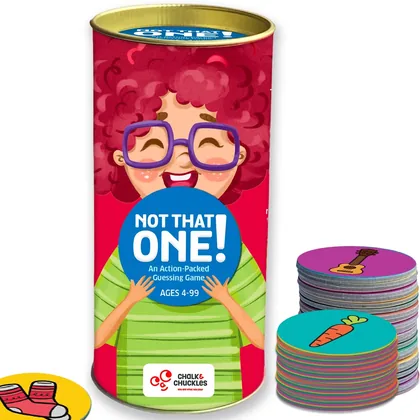
What's in the box
- 100Picture tokens
each shows a different object; kept in a small travel box - 1Mystery object booklet
for marking the secret token each round - 1Wipe-erasable marker
so the booklet can be reused - 1Instructions
Box: 8 × 8 × 16 cm, 0.22 kg. Handy to know for gifting and travel.
Contents are from Chalk and Chuckles' product page for the box we link (item code CCPPL103). Safari Ltd's US listing for the same game gives the same list. There is only one edition. The maker's page does not say how many objects the booklet shows or whether a mark lasts one round or several.
Where to buy
Paid link · We may earn a commission, at no extra cost to you.
How to make sure you get a genuine copyEditions and the details worth checking.
What reviewers and players say
We found no independent reviews, parenting blogs, videos or forum threads about Not That One, which first appeared on the maker's site in May 2024. So there is little to go on beyond Chalk and Chuckles' own description. On paper it is a quick, loud mix of Guess Who and a grabbing race, with no reading and rounds of about five minutes. The written rules are short and a little loose, so expect to agree a few house rules on the first play.
What people love
- No reading needed, so young children can play with grandparents in any language
- Rounds of about five minutes, quick enough for a short break or a party
- Small, light box that travels easily
- Asking yes-or-no questions is good practice in describing colours, shapes and categories
Common complaints
- The caller only answers questions and sits out the grabbing, so take turns in that role
- There is no how-to-play video and no independent feedback yet, so it is hard to say how long children stay interested
- Fast hands win, so the youngest child at the table may need a team-mate
Based on 4 reviews and discussions
- Reference Not That One | Board game (Chalk and Chuckles product page, May 2024) · Chalk and Chuckles
- Reference Chalk and Chuckles Not That One Action Packed Guessing Game, 4Y+ (Hamleys India listing) · Hamleys India
- Reference Chalk & Chuckles Not That One! Game (US distributor listing, January 2025) · Safari Ltd
- Reference Contact: registered office and factory address (Chalk and Chuckles) · Chalk and Chuckles
Summarised in our own words from the sources above. We don't use Amazon reviews or ratings.
More like Not That One
Which game is the best fit?
Our picks if Not That One isn't quite right.
Swipe to compare every game
| Compare the games.The details that make a difference. |
YOU’RE VIEWING
 Not That One
|
ANOTHER WAY TO PLAY
 Guess Who?
|
ANOTHER WAY TO PLAY
 Guess in 10
|
ANOTHER WAY TO PLAY
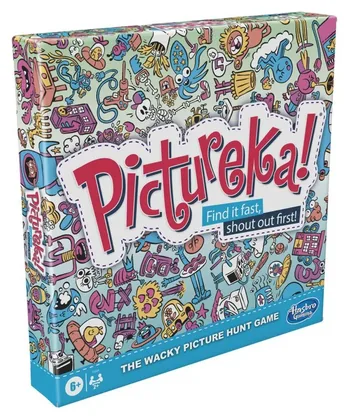 Pictureka!
|
|---|---|---|---|---|
| Why consider it | This game Ask yes-or-no questions, grab tokens, and dodge the secret one | A different fit The classic yes-or-no guessing game, slower and turn by turn | A different fit Skillmatics' question-and-clue card game for slightly older children | A different fit Another race to spot pictures across a crowded table |
| Players | 2–6 | 2 | 2–6 | 2–6 |
| Best with | 3-5 | 2 | 4-6, in two teams | 3-5 |
| Play time | 10–30 min | 10–20 min | 20 min | 20–30 min |
| Age | 5+ | 6+ | 6+ | 6+ |
| Rules | Easy | Easy | Easy | Easy |
| Indian edition | Available | Available | Available | Available |
| On this page | Explore Guess Who? | Explore Guess in 10 | Explore Pictureka! |
More from Chalk and Chuckles
Another way into their collection.
More deduction games
Different games. A familiar kind of fun.
Guess in 10
Ten yes-or-no questions to name the hidden animal.
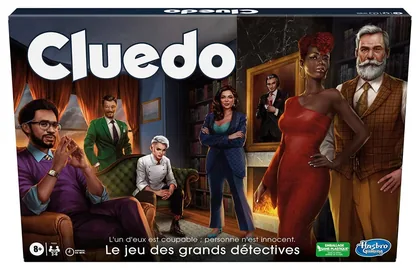
Cluedo
Work out who did it, where, and with which weapon
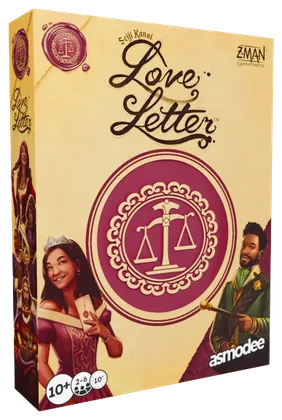
Love Letter
Hold one card, guess your rivals' cards, reach the princess

Outfoxed!
Young detectives team up to catch a pie-stealing fox
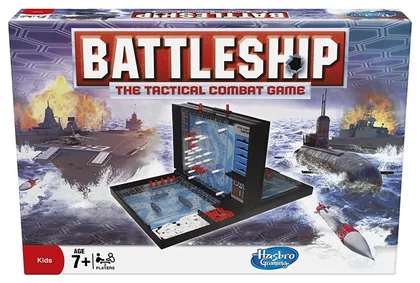
Battleship
Hide your fleet, call out coordinates, sink every enemy ship
Also playable with two
For game nights with two players.
Outfoxed!
Young detectives team up to catch a pie-stealing fox
Battleship
Hide your fleet, call out coordinates, sink every enemy ship
Guess Who?
Ask yes-or-no questions to unmask your opponent's mystery person
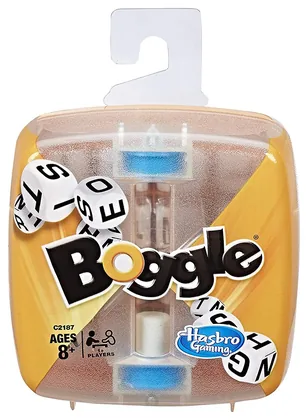
Boggle
Shake the letter cubes and find words before time runs out
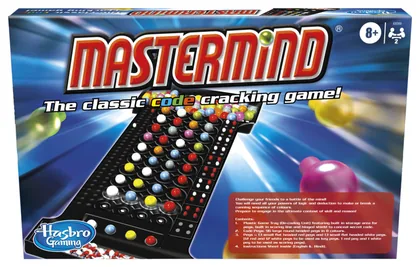
Mastermind
Crack a hidden four-colour code using logic and clues
Questions people ask about Not That One
What age is Not That One for?
The maker's product page says 5 to 10 years, and listings go up to 99 because adults can join in. Children of about 5 to 8 get the most out of it; older children may want something with more strategy.
How many players can play Not That One?
The box says 2 or more players. One player chooses the secret token, so it is livelier with three or more, and with a big group the grabbing gets wild.
Can Not That One be played in Hindi?
Yes. The tokens are pictures and the questions are spoken, so you can ask and answer in Hindi or any other language. Only the rules are in English.
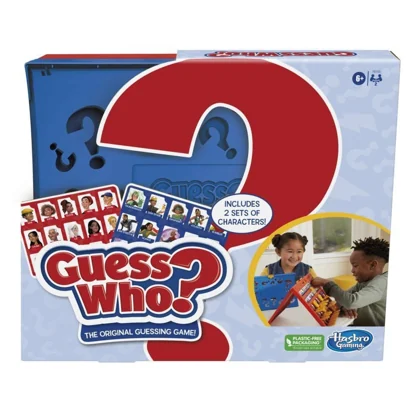
Is Not That One like Guess Who?
It uses the same yes-or-no questions as Guess Who, but everyone grabs tokens at once and must avoid the secret one. Rounds are much quicker and louder.
Is Not That One made in India?
It comes from Chalk and Chuckles, an Indian company that lists its own factory in Kundli, Haryana. The maker's page for this game does not state the country of origin, so check the box or listing if it matters to you.
Game facts
- Publisher
- Chalk and Chuckles (Chalk and Chuckles Products Pvt Ltd, New Delhi, India)
- In India
- Chalk and Chuckles, an Indian company (registered office in New Delhi, factory in Kundli, Haryana), which makes and sells the game in India
- First published
- 2024
- Players
- 2–6
- Barcode
- 8906045561037
- Language
- Little reading – The tokens are pictures of everyday objects, so nobody reads during play. The questions and answers are spoken, so you can play entirely in Hindi, Tamil, Bengali or whatever mix of languages your family uses. Only the rules are in English.
- Box size and weight
- 8 × 8 × 16 cm, 0.22 kg
Sources & photo creditsThe references behind this guide.
Facts on this page come from the publisher, the Indian maker or distributor, and the sources below. Photos are credited under each one.