




Two-player game
Battleship
Hide your fleet, call out coordinates, sink every enemy ship
- Set-up
- About 3 min
- Reading
- None
The quick verdict
Full verdict ↓Great for Children from 7 who enjoy suspense and a bit of guesswork
Think twice if You want a game for three or more players
How we rate it
Learning curve. Call a square, hear 'hit' or 'miss', mark it with a peg. The only skill to learn is reading letter-and-number grid positions, so it sits at 1 on our scale with Connect 4.
Luck & skill. Early shots are pure guesswork, so whoever stumbles on ships first often wins. After a hit, logic takes over to finish the ship off, and spreading your ships so they don't touch helps, but luck still counts for more than skill.
Interaction. Every shot is aimed at your opponent, and you answer each other's calls all game.
Set-up. The first time, an adult twists the ships and pegs off their plastic runners and sticks a label on each lid. Each game after that takes a couple of minutes: open the cases, share out the pegs and secretly place your five ships.
Reading. No reading during play: you only need the letters A to J and numbers 1 to 10. The rules on the box back are in English.
Learning curve: 1 = UNO or Connect 4; 3 = Catan; 5 = a heavy strategy game. These describe the experience, not an overall score.
Paid link · We may earn a commission, at no extra cost to you.
Is Battleship right for you?
Great if
- Children from 7 who enjoy suspense and a bit of guesswork
- Parent-and-child games: each fleet is hidden behind a lid, so it is fair across ages
- Practising letter-and-number grid references, the same idea used on maps and graphs
- A calm 20- to 30-minute game for two; the cases close up for storage
Skip it if
- You want a game for three or more players
- Your child gets bored by long runs of misses; the first part of each game is mostly guessing
- You dislike tiny parts; the box has 252 small pegs that are easy to lose
A place on the honours list
Good company to be in.
Recognition from beyond our table.
National Toy Hall of Fame (The Strong National Museum of Play), 2025 (Inducted)
How Battleship plays
Each player gets a portable battle case with two grids: the flat ocean grid for your own ships and the upright target grid for tracking your shots. The first time you play, you snap the ten plastic ships off their frame and share out the red and white pegs.
- Time to teach: about 5 minutes.
- Reading and language: You call out grid positions such as 'D-4' and answer 'hit' or 'miss', so players need the letters A to J and numbers 1 to 10. Ship names are in English but can be said in any language. The rules leaflet is in English.
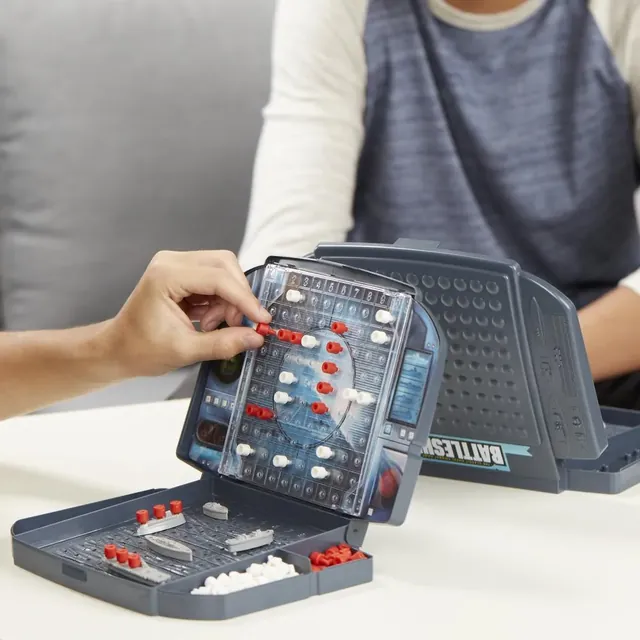
How to Play Battleship · Triple S Games
Choose a video · Watch right here
If this creator doesn’t allow embedded playback, watch on YouTube ↗.
A turn, step by step
- 1Hide
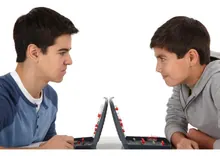
Sit facing each other with the lids up as screens. Each player secretly pegs five ships into the ocean grid of their own case, across or up and down, never diagonally.
- 2Fire
On your turn, call one square by letter and number, such as 'D-4'. Your opponent answers 'miss', or 'hit' and which ship, and you mark it with a white or red peg on your upright target grid.
- 3Win
When every hole in a ship has a red peg, it sinks and its owner must say so. Sink all five enemy ships first to win. For a quicker game, the box's Salvo rules let you fire one shot for each of your ships still afloat.
The full explanation: how a game of Battleship goes
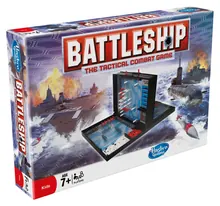
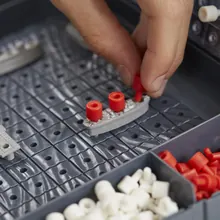
Sitting across from each other with the lids raised, both players secretly place five ships. In the India-made box they are a carrier (5 holes long), a battleship (4), a cruiser (3), a submarine (3) and a destroyer (2); some international boxes call the last two a destroyer and a patrol boat. Ships go across or up and down, never diagonally.
On your turn you call out one position by letter and number, such as 'D-4'. Your opponent says 'miss', or 'hit' and which ship. You record it with a white or red peg on your target grid, and your opponent puts a red peg into any ship that was hit.
When every hole in a ship has a red peg, it has sunk and its owner says so. The first player to sink the whole enemy fleet wins.
Experienced players can try the Salvo game: you fire as many shots per turn as you have ships still afloat, starting with five, and lose a shot for each of your ships that is sunk. For a harder game, don't say which ship was hit.
What's in the box
- 2Battle cases
one per player: a flat ocean grid for your ships, an upright target grid in the lid that also screens your fleet, and trays for ships and pegs - 10Ships
five per player: Carrier (5 holes), Battleship (4), Cruiser (3), Submarine (3) and Destroyer (2); they come on plastic runners and twist off - 168White 'miss' pegs
84 per player, on two runners each - 84Red 'hit' pegs
42 per player, on one runner each - 1Label sheet
two Battleship labels to stick on the lids - 1Rules
printed on the back of the box, in English
Box: 38 × 26 × 7 cm, 1.07 kg. Handy to know for gifting and travel.
From the instructions printed on the back of the Indian E8260 box, which say each player's kit has five ships, two runners of white pegs (84) and one runner of red pegs (42). Hasbro's international box (A3264, 'The Classic Naval Combat Game') has the same 10 ships and the same totals of 84 red and 168 white pegs, but names the 3-hole ship a destroyer and the 2-hole ship a patrol boat, and comes with a separate rules leaflet. Hasbro's newer US box (F4527) has green pegs in place of the white ones. Whether the E8260 box also includes a separate rules leaflet is not stated.
Where to buy
Paid link · We may earn a commission, at no extra cost to you.
How to make sure you get a genuine copyEditions and the details worth checking.
What reviewers and players say
Battleship is the two-player guessing game most families already know, and reviewers still enjoy its simple rules, quick 20- to 30-minute games and the suspense of every called shot. Parents and teachers like that it teaches grid references and honest scorekeeping. The common criticism is that much of it is guesswork, especially at the start, so it offers little depth for adults, and it only works for two. The Salvo rules printed on the Indian box make it faster and a little more tactical for older children.
What people love
- The rules take minutes to learn and a game lasts 20 to 30 minutes
- Children practise letter-and-number grid references and learn to call hits and misses honestly
- Every shot carries suspense, and the first hit on a hidden ship is a real thrill
- The fold-up battle cases store the ships and pegs, so it packs away neatly
Common complaints
- Much of the game is guessing, so luck often decides who finds the ships first
- Strictly for two players
- In the Salvo variant the player who gets ahead can pull away, so some endings are one-sided
Based on 6 reviews and discussions
- Review Battleship Board Game Review (Eric Mortensen, June 2022) · Geeky Hobbies
- Review Battleship review (David Ireland, April 2025) · Zatu Games blog
- Review Battleship Review (WGTP, September 2023) · What's Good to Play (UK)
- Players How can I teach kids how to play Battleship? (December 2011) · Board & Card Games Stack Exchange
- Award Battleship (inducted 2025) · The Strong National Museum of Play
- Reference Battleship (game) · Wikipedia
Summarised in our own words from the sources above. We don't use Amazon reviews or ratings.
More like Battleship
Which game is the best fit?
Our picks if Battleship isn't quite right.
Swipe to compare every game
| Compare the games.The details that make a difference. |
YOU’RE VIEWING
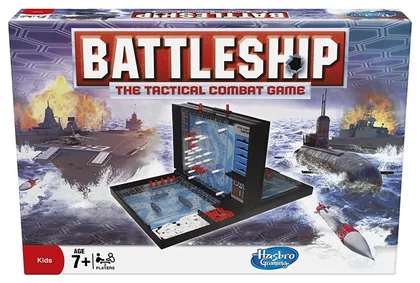 Battleship
|
ANOTHER WAY TO PLAY
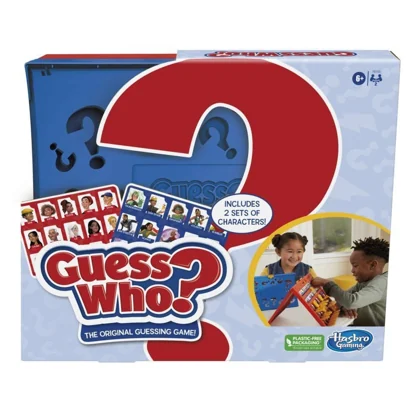 Guess Who?
|
ANOTHER WAY TO PLAY
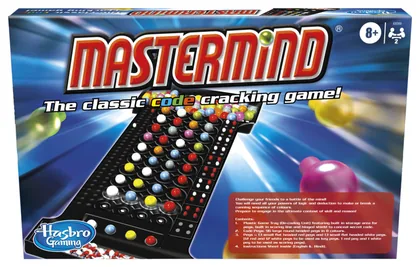 Mastermind
|
ANOTHER WAY TO PLAY
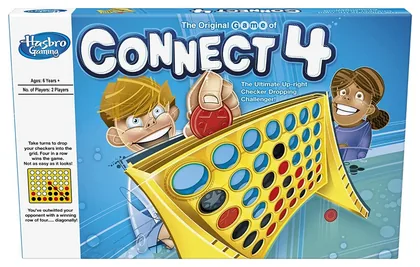 Connect 4
|
|---|---|---|---|---|
| Why consider it | This game Hide your fleet, call out coordinates, sink every enemy ship | A different fit Another two-player guessing classic, simpler for 6-year-olds | A different fit Two-player deduction: crack a hidden colour code from clues | A different fit A quicker two-player Hasbro classic made in India |
| Players | 2 | 2 | 2 | 2 |
| Best with | 2 | 2 | 2 | 2 |
| Play time | 20–30 min | 10–20 min | 10–30 min | 5–15 min |
| Age | 7+ | 6+ | 8+ | 6+ |
| Rules | Easy | Easy | Easy | Easy |
| Indian edition | Available | Available | Available | Available |
| On this page | Explore Guess Who? | Explore Mastermind | Explore Connect 4 |
More from Hasbro
Another way into their collection.
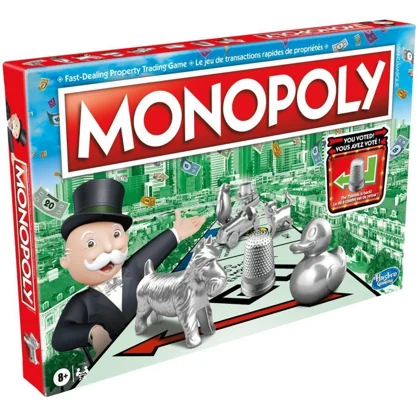
Monopoly
Roll, buy property, collect rent, and bankrupt everyone else

Jenga
Pull a block, stack it on top, don't topple the tower

Taboo
Get your team to guess the word without saying the obvious ones
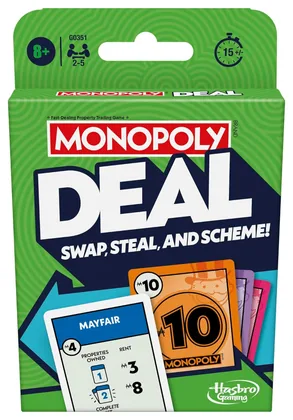
Monopoly Deal
Monopoly as a 15-minute card game of rent, raids and sets
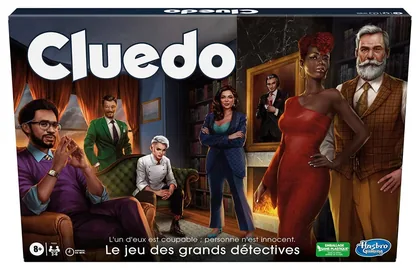
Cluedo
Work out who did it, where, and with which weapon
More from Hasbro India
Also made or sold in India by Hasbro India.
Jenga
Pull a block, stack it on top, don't topple the tower
Taboo
Get your team to guess the word without saying the obvious ones
Monopoly Deal
Monopoly as a 15-minute card game of rent, raids and sets
Cluedo
Work out who did it, where, and with which weapon

The Game of Life
Spin through college, jobs, family and retirement; richest player wins
More deduction games
Different games. A familiar kind of fun.

Guess in 10
Ten yes-or-no questions to name the hidden animal.
Cluedo
Work out who did it, where, and with which weapon

Love Letter
Hold one card, guess your rivals' cards, reach the princess

Outfoxed!
Young detectives team up to catch a pie-stealing fox
Guess Who?
Ask yes-or-no questions to unmask your opponent's mystery person
Questions people ask about Battleship
How many ships are there in Battleship?
Each player has five ships. In the India-made box they are a carrier (5 holes), a battleship (4), a cruiser (3), a submarine (3) and a destroyer (2); some international boxes call the last two a destroyer and a patrol boat. The box has ten ships in all, one fleet per player. Ships go across or up and down, never diagonally.
What is the Salvo rule in Battleship?
Salvo is a variant in Hasbro's rules for experienced players. Instead of one shot per turn, you fire one shot for each of your ships still afloat, so you start with five and lose one for every ship that is sunk. It makes the game faster and more tactical.
Can you play Battleship on paper?
Yes. Battleship began as a pencil-and-paper game around the First World War, and you can still draw two 10 x 10 grids for each player. The boxed game saves the drawing, hides each fleet behind a lid and marks shots with pegs, which is easier for children.
Should I buy the classic or the electronic Battleship?
For most families the classic board game is the better buy: it is made in India, needs no batteries and costs less. Electronic Battleship adds sounds and lights, but it is an imported set.
Game facts
- Publisher
- Hasbro (Milton Bradley's plastic board version, 1967)
- In India
- Hasbro India Toys Pvt. Ltd., Mumbai (marketer); made for it by Funskool (India) Ltd., Chennai
- First published
- 1967
- Players
- 2
- Barcode
- 630509889150
- Language
- Little reading – You call out grid positions such as 'D-4' and answer 'hit' or 'miss', so players need the letters A to J and numbers 1 to 10. Ship names are in English but can be said in any language. The rules leaflet is in English.
- Box size and weight
- 38 × 26 × 7 cm, 1.07 kg
- Awards
- National Toy Hall of Fame (The Strong National Museum of Play), 2025 (Inducted)
Sources & photo creditsThe references behind this guide.
Facts on this page come from the publisher, the Indian maker or distributor, and the sources below. Photos are credited under each one.
- Hasbro India - Battleship official instructions page (A3264)
- Hasbro - Battleship A3264 rules (PDF)
- Battleship (game) - Wikipedia
- Toycra - Hasbro Gaming Battleship Board Game Classic Strategy Game (E8260)
- Toycra - Hasbro Electronic Battleship Game
- Crossword - Battleship Card Game
- Hamleys India - Funskool Battleship