
Family game
Monopoly
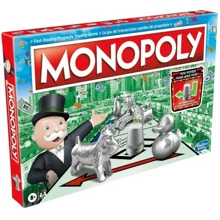
Roll, buy property, collect rent, and bankrupt everyone else
- Set-up
- About 5 min
- Reading
- Some
The quick verdict
Full verdict ↓Great for Long summer-holiday afternoons when nobody is in a hurry
Think twice if You want a game that reliably ends within an hour
How we rate it
Learning curve. The basic loop is simple, but mortgages, building evenly, auctions and jail add a few more rules than a pure family game. That puts it with Ticket to Ride on our scale.
Luck & skill. The dice decide where you land and so what you can buy. Skill shows in trading, auctions and when to build, but luck usually matters more.
Interaction. You pay each other rent, bid in auctions and haggle over trades all game, and the aim is to bankrupt the others.
Set-up. Choose a banker, give each player the starting money (1,500 in Monopoly money, in set notes), shuffle the Chance and Community Chest cards and put everyone on GO. Counting out the money is the slowest part.
Reading. Title deeds and the Chance and Community Chest cards have short English text that is read aloud. Children who read a little can play with help.
Learning curve: 1 = UNO or Connect 4; 3 = Catan; 5 = a heavy strategy game. These describe the experience, not an overall score.
Paid link · We may earn a commission, at no extra cost to you.
Is Monopoly right for you?
Great if
- Long summer-holiday afternoons when nobody is in a hurry
- Helping kids practise counting money, making change and weighing up deals
- Families who already know the idea from childhood games of Monopoly or Business
- Gifting, because most families recognise the name
Skip it if
- You want a game that reliably ends within an hour
- Your group dislikes elimination, because bankrupt players sit out until the game ends
- You prefer real decisions to dice luck (Catan is a better fit)
A place on the honours list
Good company to be in.
Recognition from beyond our table.
US National Toy Hall of Fame (The Strong National Museum of Play), 1999 (Inducted)
How Monopoly plays
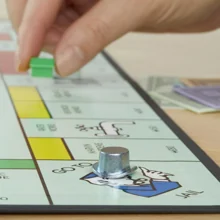
Everyone starts with the same amount of money and a token on GO. On your turn you roll two dice and move around the board. Every time you pass GO, the bank pays you a salary.
- Time to teach: about 10-15 minutes.
- Reading and language: Title deeds and the Chance and Community Chest cards have English text that players read aloud during the game. Hasbro India also sells Monopoly in Telugu and Tamil, so check the box language before buying.
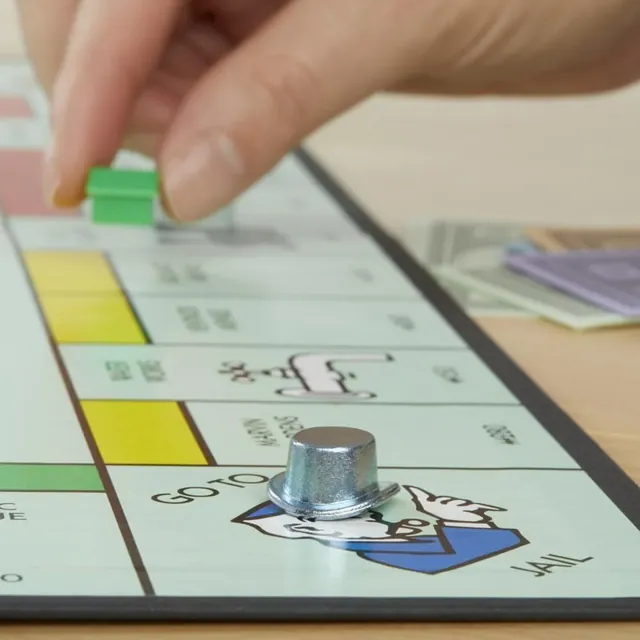
How To Play Monopoly Correctly! - A Full Tutorial · Watch It Played
Choose a video · Watch right here
If this creator doesn’t allow embedded playback, watch on YouTube ↗.
A turn, step by step
- 1Roll
Roll both dice and move your token that many spaces. Each time you pass GO, the bank pays you your salary.
- 2Buy
Land on an unowned property and you may buy it at the printed price. If you don't want it, the bank auctions it and anyone can bid. Land on a property someone owns and you pay them rent.
- 3Build
Once you own every property in a colour set, you can build houses and then hotels there, evenly across the set, and the rent shoots up.
- 4Win
If you can't pay, sell buildings or mortgage property. If that still isn't enough, you are bankrupt and out. The last player left with money wins.
The full explanation: how a game of Monopoly goes
If you land on a property nobody owns, you can buy it at the printed price. If you don't want it, the official rules say the bank auctions it and anyone can bid.
If you land on someone else's property, you pay them rent. If you own every property in one colour group, the rent on those properties doubles, and you can start building houses and then hotels, which push rent up sharply. Houses must be built evenly across the group.
Chance and Community Chest cards, tax squares and jail add twists. You can get out of jail by rolling doubles, using a 'Get Out of Jail Free' card or paying a fine. If you can't pay what you owe, you can mortgage properties. If that still isn't enough, you are bankrupt and out of the game.
The last player left in the game wins. The popular 'Free Parking jackpot' is a house rule, not part of the official rules. If time is short, agree on a finishing time before you start and count up who is richest when it arrives, as long as everyone accepts the change at the start.
What's in the box
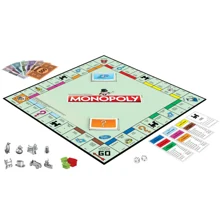
- 1Gameboard
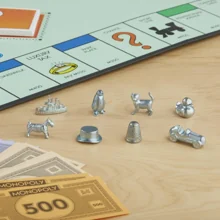
- 8Tokens
Hasbro says the token selection can vary between C1009 packs. - 28Title Deed cards
- 16Chance cards
- 16Community Chest cards
- 32Houses
green - 12Hotels
red - 2Dice
- 1Money pack
Monopoly banknotes - 1Rules leaflet
Contents follow Hasbro’s C1009 product page. The linked Token Vote Edition has eight tokens.
Where to buy
Paid link · We may earn a commission, at no extra cost to you.
How to make sure you get a genuine copyEditions and the details worth checking.
What reviewers and players say
Monopoly is the board game most Indian families already know, and the appeal is easy to see: rolling, buying, collecting rent and striking deals create real tension and big comebacks. Writers who defend it point to its trading and auction phases and to how naturally children pick up money handling. The usual complaints are that it runs long, that the dice decide a lot, and that bankrupt players sit out. Much of the length comes from house rules such as the Free Parking jackpot and skipping auctions, so playing by Hasbro's printed rules makes a real difference. These opinions concern classic Monopoly gameplay across editions, rather than a hands-on test of this Token Vote pack.
What people love
- Everyone knows the idea, so grandparents, parents and children can sit down together quickly
- Trading and auctions give real decisions and lots of table talk
- Children practise counting money, making change and weighing up deals without noticing
- Big swings of fortune make for games people remember
Common complaints
- Games can drag on for hours, especially with house rules
- Dice luck decides a lot of the result
- Players who go bankrupt early have to sit and watch until the end
Based on 5 reviews and discussions
- Review In defence of Monopoly: why a toxic attitude is bad for the hobby (Andrew Holmes, August 2019) · Meeple Mountain
- Review Playing Monopoly with children is an exciting experience (MTsokkinen, February 2016) · PlayLab! Magazine, Tampere University
- Players How to play a quicker game of Monopoly? (April 2017) · Board & Card Games Stack Exchange
- Award National Toy Hall of Fame: inductees list (Monopoly, 1999) · Wikipedia
- Reference Monopoly (game) · Wikipedia
Summarised in our own words from the sources above. We don't use Amazon reviews or ratings.
More like Monopoly
Which game is the best fit?
Our picks if Monopoly isn't quite right.
Swipe to compare every game
| Compare the games.The details that make a difference. |
YOU’RE VIEWING
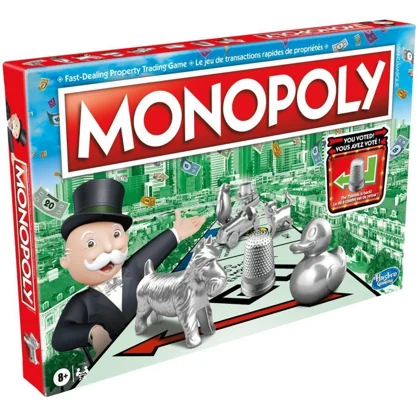 Monopoly
|
ANOTHER WAY TO PLAY
 Monopoly Junior
|
ANOTHER WAY TO PLAY
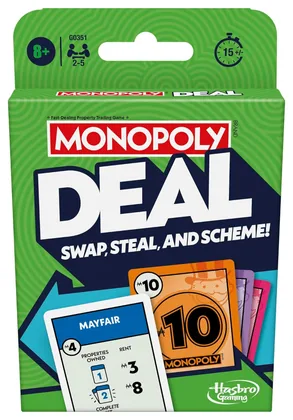 Monopoly Deal
|
ANOTHER WAY TO PLAY
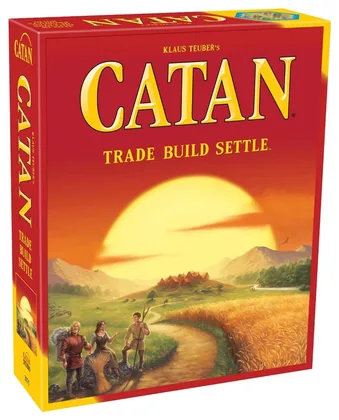 Catan
Catan
|
|---|---|---|---|---|
| Why consider it | This game Roll, buy property, collect rent, and bankrupt everyone else | A different fit Hasbro's version for ages 5 and up: one die, no houses or hotels, done in half an hour | A different fit Hasbro's card game version: the same buy-and-charge-rent idea in a much shorter game | A different fit Trading and building like Monopoly, but nobody gets knocked out |
| Players | 2–6 | 2–4 | 2–5 | 3–4 |
| Best with | 3-4 | 2-4 | 3-5 | 4 |
| Play time | 1–6 hrs | 20–30 min | 15–30 min | 60–90 min |
| Age | 8+ | 5+ | 8+ | 10+ |
| Rules | Easy | Easy | Easy | Medium |
| Indian edition | Imported | Imported | Available | Available |
| On this page | Explore Monopoly Junior | Explore Monopoly Deal | Explore Catan |
More from Hasbro
Another way into their collection.

Jenga
Pull a block, stack it on top, don't topple the tower

Taboo
Get your team to guess the word without saying the obvious ones
Monopoly Deal
Monopoly as a 15-minute card game of rent, raids and sets
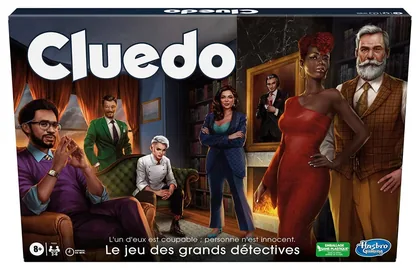
Cluedo
Work out who did it, where, and with which weapon

The Game of Life
Spin through college, jobs, family and retirement; richest player wins
More roll-and-move games
Different games. A familiar kind of fun.

Business
India's own property game: buy cities, collect rent, build hotels
The Game of Life
Spin through college, jobs, family and retirement; richest player wins
Monopoly Junior
Monopoly for little ones: one die, simple rules, half an hour
Cluedo
Work out who did it, where, and with which weapon

Ludo
India's favourite race game: roll a six, cut and race home
Also playable with two
For game nights with two players.
Monopoly Junior
Monopoly for little ones: one die, simple rules, half an hour
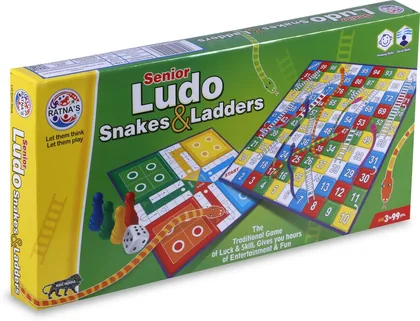
Snakes and Ladders
Climb the ladders, dodge the snakes, first to 100 wins
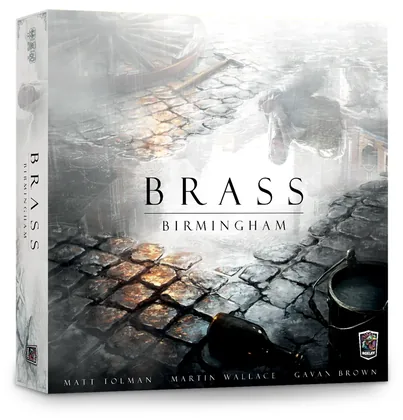
Brass: Birmingham
Build canals, railways and industries across Industrial Revolution England
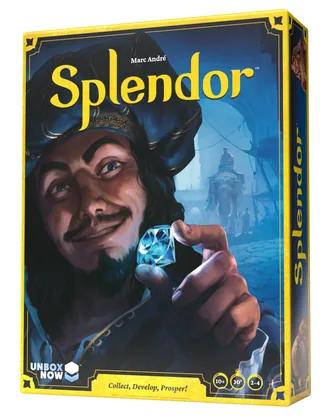
Splendor
A quick gem-trading race where every card makes the next easier.

Azul
Draft colourful tiles and build the best-scoring palace wall
Questions people ask about Monopoly
Is Monopoly the same as the 'Business' game sold in India?
No. Monopoly is made by Hasbro. 'Business', 'Business India' and 'International Business' are separate games from Indian companies such as Ekta and Frank. They share the basic idea of rolling dice, buying cities and collecting rent, but they have their own boards, money and rules. They are perfectly legitimate games, just not Monopoly.
Is there an Indian edition of Monopoly?
Yes. Hasbro India sells a Monopoly India Edition with Indian cities and rupees, plus Monopoly: Cricket Edition and Telugu and Tamil versions of the classic game. Some of these are manufactured in India.
Is a Funskool Monopoly genuine?
Yes. Funskool was set up in 1987 as a joint venture between Hasbro and MRF and published licensed Monopoly editions in India for years. Hasbro left the venture in 2014 and now sells Monopoly in India under its own name. Some current Hasbro boxes still name Funskool as the manufacturer.
How long does a game of Monopoly take?
Often well over an hour. Wikipedia gives a range of 1 to 6 hours. Playing by the official rules, including auctioning properties nobody buys, keeps money moving. If you need a fixed end, agree on a finishing time before you start.
Game facts
- Designed by
- Lizzie Magie, Charles Darrow
- Publisher
- Hasbro (originally Parker Brothers)
- First published
- 1935
- Players
- 2–6
- Language
- Some English – Title deeds and the Chance and Community Chest cards have English text that players read aloud during the game. Hasbro India also sells Monopoly in Telugu and Tamil, so check the box language before buying.
- Awards
- US National Toy Hall of Fame (The Strong National Museum of Play), 1999 (Inducted)
Sources & photo creditsThe references behind this guide.
Facts on this page come from the publisher, the Indian maker or distributor, and the sources below. Photos are credited under each one.
- Monopoly (game) - Wikipedia
- List of licensed and localized editions of Monopoly: Africa and Asia - Wikipedia
- Funskool - Wikipedia
- Hasbro Consumer Care - Monopoly (C1009) contents
- Hasbro Instructions - Monopoly Classic with Storage Tray and Larger Tokens (G0009)
- Hasbro Monopoly rules (PDF)
- Toycra - Hasbro Monopoly Board Game (E8272)
- Toycra - Hasbro Monopoly Classic Board Game (G0009)
- FirstCry - Monopoly board games
- Crossword - Monopoly Board Game E8272
- India Today Gaming - Hasbro launches Monopoly Cricket Edition in India (Oct 2023)
- Passionate in Marketing - Monopoly App Banking Edition India launch (Nov 2025)
- Telangana Today - Hasbro launches Monopoly, Game of Life in Telugu (Dec 2022)
- Flipkart - Ekta Toys Business India board game
- Kheliya Toys - Business India Edition (Frank)