
Card game
Memory Animal Family
Match each animal baby to its parents, from memory
- Set-up
- About 3 min
- Reading
- Little
The quick verdict
Full verdict ↓Great for Children of about 3 to 6 who are ready for their first card game with rules
Think twice if You want the memory board game with a race round a path: that is Funskool's Match & Move Memory, a different box
How we rate it
Learning curve. Turn two cards and keep them if they belong to the same animal. A three-year-old can follow it with a few pairs, so it sits at 1 on our scale with UNO.
Luck & skill. The first few turns are lucky guesses. After that, remembering every card anyone has turned up decides who collects pairs, and young children often beat adults at it.
Interaction. You can't block anyone, but every card another player turns up tells you something, so everyone watches every turn.
Set-up. Mix the 72 cards and lay them face down in a 9-by-8 grid (or half of them in a 6-by-6 grid). The first time, punch the cards out of the sheet first.
Reading. Matching is done by the pictures. The English animal-family labels on the cards and the box-back rules are the only reading.
Learning curve: 1 = UNO or Connect 4; 3 = Catan; 5 = a heavy strategy game. These describe the experience, not an overall score.
Paid link · We may earn a commission, at no extra cost to you.
Is Memory Animal Family right for you?
Great if
- Children of about 3 to 6 who are ready for their first card game with rules
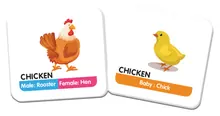
- Talking about animals and their babies: the cards name the father, mother and baby, such as rooster, hen and chick
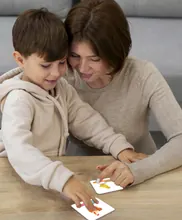
- A quiet game with grandparents or a parent after school; nobody needs to read
- Playing alone: the box has a solo rule where you count how many turns you need
Skip it if
- You want the memory board game with a race round a path: that is Funskool's Match & Move Memory, a different box
- Your children are 8 or older and already good at pairs games; there is nothing more to it than flip and match
- You have a toddler under 3 at home: the box says 3 and up, and 72 loose cardboard cards are easy to bend, chew and lose
How Memory Animal Family plays
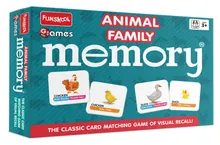
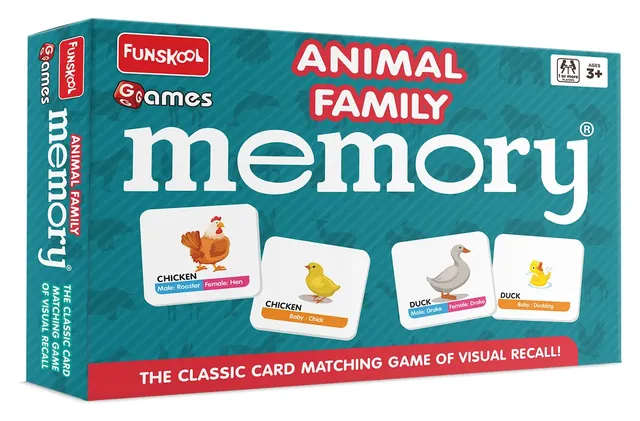
Set-up: the 72 picture cards come on cardboard sheets, so punch them out carefully the first time. Mix them and lay them picture-side down in a grid. The box suggests 9 across and 8 down for all 72 cards (36 pairs), or half the cards (18 pairs) in a 6-by-6 grid for beginners.
- Time to teach: about 2 minutes.
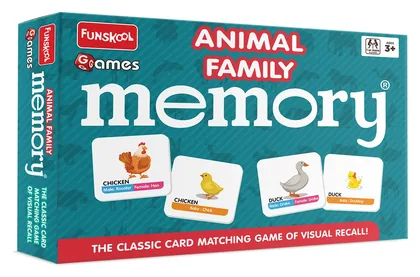
- Reading and language: You match cards by their pictures, so children who can't read can play in any language. The cards also carry short English labels (for example 'Male: Rooster', 'Female: Hen', 'Baby: Chick'), which older children can read aloud, and the rules on the box back are in English.
How to play Memory · Triple S Games
Choose a video · Watch right here
If this creator doesn’t allow embedded playback, watch on YouTube ↗.
A turn, step by step
- 1Flip
Turn any two face-down cards picture-side up so everyone can see them.
- 2Match
A parents card and a baby card of the same animal is a pair: keep it and go again. Otherwise turn both back in the same places.
- 3Win
When all 36 pairs are found, the player with the most pairs wins.
The full explanation: how a game of Memory Animal Family goes
A turn: the youngest player goes first and turns pass to the left. Turn any two cards picture-side up so everyone can see them. A match is one parents card and one baby card of the same animal, for example the rooster-and-hen card and the chick card. If you make a match, keep the pair and take another turn. If the two cards show different animals, turn them back face down in the same places and your turn ends.
Winning: the game ends when every pair has been found, and the player with the most pairs wins. Playing alone, set out any number of pairs and count how many turns you need to clear them all, then try to beat that next time.
Tips: start a three-year-old with 6 to 8 pairs of animals they know and add more as they get better. Saying the names aloud as cards turn up ('that's the hen and rooster, where did we see the chick?') helps everyone remember where things are, in English, Hindi or any home language.
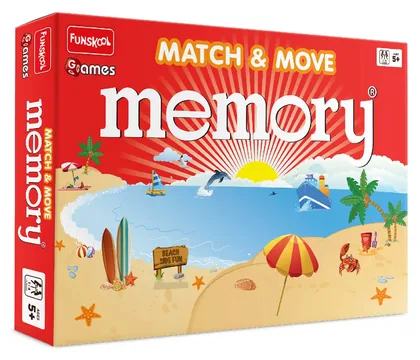
How it differs from Funskool's Match & Move Memory: Match & Move has a board, four playing pieces and 24 single picture cards plus a wild card. You turn one card at a time to move your piece along a picture path, and the first piece home wins. Memory Animal Family has no board: it is the classic pairs game, turning two cards at a time and collecting the most pairs.
What's in the box
- 72Picture cards
36 pairs, each a parents card and a baby card of the same animal; they come on cardboard sheets to punch out - –Rules
printed on the back of the box
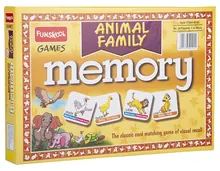
The contents (72 picture cards punched from a cardboard sheet) and the rules come from the box back, seen in an Indian store's photo; Funskool's own page does not list the contents. We found no separate rules leaflet mentioned.
Where to buy
Paid link · We may earn a commission, at no extra cost to you.
How to make sure you get a genuine copyEditions and the details worth checking.
What reviewers and players say
We found no written reviews, videos or forum threads about Funskool's Memory Animal Family, so this summary leans on the game's design and Funskool's own description. It is the classic pairs memory game with a gentle twist: instead of two identical pictures, you pair an animal's parents with its baby, which gives parents something to talk about while children play. With 72 cards it can be played big for 5 to 8 year olds or cut down to a handful of pairs for a three-year-old, and it works alone. There is nothing more to it than flip and match, so older children may move on quickly.
What people love
- No reading needed, so pre-schoolers can play with grandparents in any language
- Easy to scale: use a few pairs for a toddler or all 36 for older children
- Parent-and-baby pairs give children animal names to learn, such as hen, rooster and chick
- A solo rule on the box, so a child can play alone and try to beat their own score
Common complaints
- The cards are punched from a cardboard sheet and can bend or get lost, so a pouch or rubber band helps
- Children of 8 and up who are good at pairs games may find it too simple
- Funskool describes it as good for visual recall and concentration, but we found no independent reviews to back up how children find it
Based on 5 reviews and discussions
- Reference Memory Animal Family product page (Funskool) · Funskool
- Reference Funskool Memory Animal Family listing with box-back photo (FirstCry) · FirstCry
- Reference Funskool Memory Animal Family listing (Hamleys India) · Hamleys India
- Reference Concentration (card game) · Wikipedia
- Video How to play Memory (Triple S Games) · YouTube
Summarised in our own words from the sources above. We don't use Amazon reviews or ratings.
More like Memory Animal Family
Which game is the best fit?
Our picks if Memory Animal Family isn't quite right.
Swipe to compare every game
| Compare the games.The details that make a difference. |
YOU’RE VIEWING
 Memory Animal Family
|
ANOTHER WAY TO PLAY
 Match & Move Memory
|
ANOTHER WAY TO PLAY
 Hoot Owl Hoot!
|
ANOTHER WAY TO PLAY
 Outfoxed!
|
|---|---|---|---|---|
| Why consider it | This game Match each animal baby to its parents, from memory | A different fit Funskool's memory board game: turn one card at a time to race your piece home, instead of collecting pairs | A different fit Another first game for 4 to 6 year olds, played together as a team | A different fit A step up for 5 to 8 year olds: memory plus clue-finding, played as a team |
| Players | 1–4 | 1–4 | 2–4 | 2–4 |
| Best with | 2-3 | 2-3 | 2-4 | 2-4 |
| Play time | 10–20 min | 15–20 min | 15 min | 20 min |
| Age | 3+ | 5+ | 4+ | 5+ |
| Rules | Easy | Easy | Easy | Easy |
| Indian edition | Available | Available | Imported | Imported |
| On this page | Explore Match & Move Memory | Explore Hoot Owl Hoot! | Explore Outfoxed! |
More from Funskool
Another way into their collection.
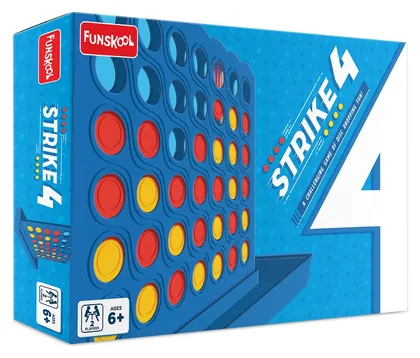
More memory games
Different games. A familiar kind of fun.
Match & Move Memory
Remember where each picture hides and race your piece home
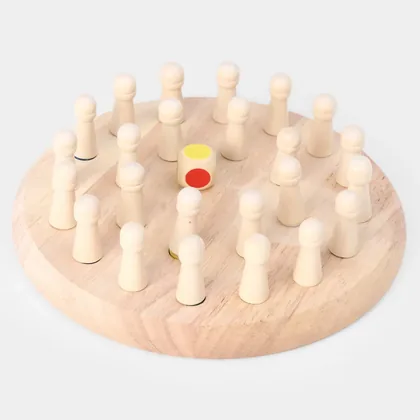
Memory Chess
Remember where the colours hide and pull out the right peg
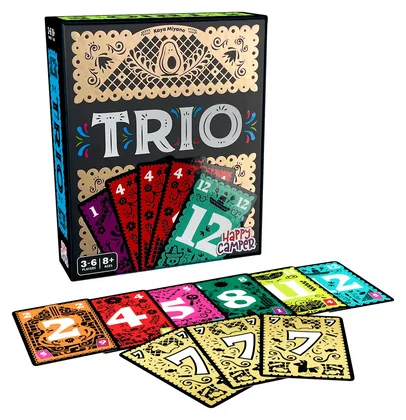
Trio
Find three of a kind by asking for highest and lowest cards

SKYJO
Swap and flip cards to finish each round with the lowest score
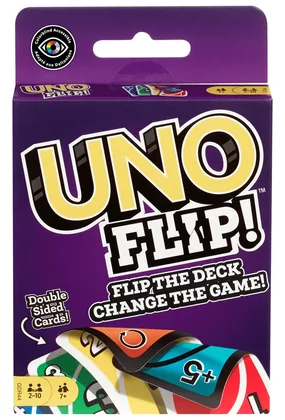
UNO Flip!
Flip every card over to UNO's nastier Dark Side and back again
Questions people ask about Memory Animal Family
How do you play Funskool Memory Animal Family?
Lay the 72 cards face down in rows. On your turn, turn over two: if one shows an animal's parents and the other its baby, keep the pair and go again; if not, turn them back. When all 36 pairs are found, the player with the most pairs wins.
What age is Memory Animal Family for?
The box and Funskool's page say 3 years and up, though some listings say 5 and above. Three- and four-year-olds do well with fewer pairs and an adult beside them; the full set of 36 pairs suits children of about 5 and up.
Is Memory Animal Family the same as Funskool's Match & Move Memory?
No. Memory Animal Family is the classic pairs game with 72 cards and no board. Match & Move Memory has a board and playing pieces, and you turn one card at a time to race your piece round a path.
Is Memory Animal Family made in India?
Yes. Funskool's product page gives India as the country of origin, and the box back says 'Country of Origin: Made in India' and 'Marketed by Funskool (India) Ltd', Chennai.
Can a child play Memory Animal Family alone?
Yes. The box has a solo rule: set out as many pairs as you like, count how many turns it takes to match them all, and try to do better each time.
Game facts
- Publisher
- Funskool (India) Ltd
- In India
- Funskool (India) Ltd, Chennai
- First published
- 2003
- Players
- 1–4
- Language
- Little reading – You match cards by their pictures, so children who can't read can play in any language. The cards also carry short English labels (for example 'Male: Rooster', 'Female: Hen', 'Baby: Chick'), which older children can read aloud, and the rules on the box back are in English.
Sources & photo creditsThe references behind this guide.
Facts on this page come from the publisher, the Indian maker or distributor, and the sources below. Photos are credited under each one.