


Strategy game
Catan
Trade wheat for brick, build roads, and race to ten points.
- Set-up
- About 20 min
- Reading
- Little
The quick verdict
Full verdict ↓Great for a sociable table of 3–4 who enjoy trading and making deals.
Think twice if you mostly play as a couple, or dislike dice luck.
How we rate it
Learning curve. Our yardstick for level 3: a few more rules than Ticket to Ride (the robber, development cards, trade rates), but most families have it down after one game.
Set-up. The first time, allow about 20 minutes to punch out the cardboard, clip the sea frame together and lay out the beginner island shown in the rulebook. After that, setting up a fresh random island takes 5 to 10 minutes.
Learning curve: 1 = UNO or Connect 4; 3 = Catan; 5 = a heavy strategy game. These describe the experience, not an overall score.
Paid link · We may earn a commission, at no extra cost to you.
Is Catan right for you?
Great if
- Groups of 3 or 4 who enjoy talking, bargaining and making deals
- Families ready to move on from Monopoly to a modern strategy game
- Weekend game nights where a game of an hour or more is welcome
- Buyers who want an official made-in-India edition at a fair price
Skip it if
- You mostly play as a couple – the base box needs at least 3 players
- Your group hates luck – a bad run of dice can leave you short of resources for a while
- You want something that finishes in under 30 minutes
A place on the honours list
Good company to be in.
Recognition from beyond our table.

Spiel des Jahres
Germany’s Game of the Year: the jury’s top family-game honour.
Meet the jury’s choice ↗More recognition 4
Deutscher Spiele Preis, 1995 (1st place)
Origins Award, Best Fantasy or Science Fiction Board Game, 1996 (Winner)
Origins Hall of Fame, 2001 (Inducted)
Games Magazine Hall of Fame, 2006 (Inducted)
How Catan plays
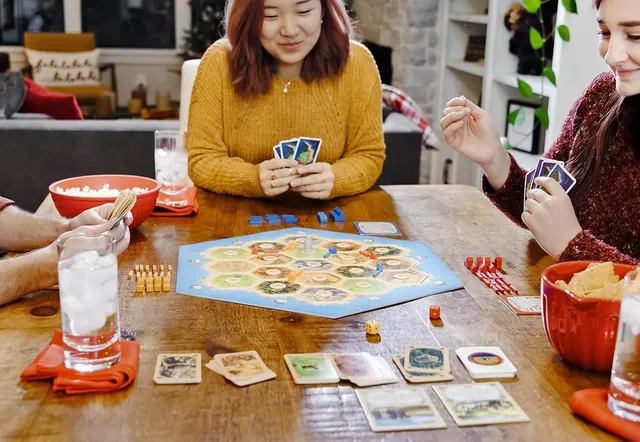
The board is an island made of hexagon tiles: fields, forests, hills, pastures, mountains and one desert. Each tile gets a number token. You place your settlements on the corners where tiles meet, and those tiles become your income.
- Time to teach: about 15 minutes.
- Reading and language: Resource cards are picture-only. Development cards and the rulebook are in English, but the text is short, so a table that mixes Hindi, English or any other language can play once one person has explained the rules.
How to Play CATAN · CATAN (official channel) · Official
Choose a video · Watch right here
If this creator doesn’t allow embedded playback, watch on YouTube ↗.
A turn, step by step
- 1Roll
Roll two dice. Every tile showing that number pays its resource to anyone with a settlement or city on its corners, so you collect cards on other people's turns too.
- 2Trade
Swap cards with the other players, or trade with the bank at 4 for 1 (3 for 1 or 2 for 1 once you've built on a harbour).
- 3Build
Spend cards on roads, settlements, cities and development cards. Settlements score 1 point, cities 2, and the first to 10 points wins.
What things cost
- RoadBrickLumber
- SettlementBrickLumberWoolGrain
- City (upgrade)2 Grain3 Ore
- Development cardWoolGrainOre
The full explanation: how a game of Catan goes
At the start of your turn you roll two dice. Every tile showing that number produces its resource – grain, lumber, brick, wool or ore – for anyone with a settlement or city touching it. So you collect cards on other people's turns too, which keeps everyone involved.
Then you trade and build. You can swap cards with other players (this is where most of the table talk happens) or trade with the bank at a worse rate. Resources are spent on roads, new settlements, upgrading settlements to cities, or development cards.
A roll of 7 produces nothing. Anyone holding more than 7 cards discards half, and the player who rolled moves the robber onto a tile, blocking it and stealing a card from someone next to it. It stops people from sitting on a big hand.
Settlements are worth 1 point and cities 2. There are bonus points for the longest road and the largest army (built from knight cards), and some development cards are hidden points. The first player to reach 10 points on their turn wins.
What's in the box
- 19Terrain tiles
forest, pasture, fields, hills, mountains and one desert - 6Sea frame pieces
- 9Harbour pieces
- 18Number tokens
- 95Resource cards
19 each of brick, lumber, wool, grain and ore - 25Development cards
knights, victory points and progress cards - 4Building cost cards
- 2Bonus cards
Longest Road and Largest Army - 20Settlements
5 in each of 4 colours - 16Cities
4 in each of 4 colours - 60Roads
15 in each of 4 colours - 2Dice
- 1Robber
- 1Rules and almanac
Box: 30 × 24 × 8 cm, 1.37 kg. Handy to know for gifting and travel.
This is the 5th-edition contents list that an Indian listing gives for Funskool's box; Funskool's own page doesn't list the contents.
Where to buy
Paid link · We may earn a commission, at no extra cost to you.
How to make sure you get a genuine copyEditions and the details worth checking.
What reviewers and players say
Catan is the game that took trading-and-building board games to a mass audience, and reviewers still recommend it as the natural next step after Monopoly or Ludo. Experienced players often say newer games now do its job better and that the dice can decide too much, but most agree it is easy to teach and lively at the table. Indian players mainly talk about price: the Funskool original costs far more than look-alike copies, and community advice leans towards buying the original if you'll play it often.
What people love
- Simple enough for people who only know Monopoly or Ludo, yet where you build and what you trade really matter.
- Trading keeps everyone talking, and you collect resources on other players' turns too, so nobody sits around waiting.
- The island is laid out differently every game, so it rarely plays the same way twice.
- No one is knocked out early, and expansions let you add more once the base game feels familiar.
Common complaints
- Dice luck: a strong starting spot can still go cold for several rounds, and one player can end up stuck with little to do.
- Seasoned players find it basic and a bit slow next to newer games, and trading can turn into arguments or ganging up on the leader.
- In India the original feels steep next to cheap copies; players who weighed it up mostly advise buying the original.
Based on 10 reviews and discussions
- Review Catan review (Katie Wickens, first published October 2024) · GamesRadar+
- Review The Settlers of Catan Review (Tyler Nichols, April 2013) · Board Game Quest
- Review Games We Love: Catan (Tom Franklin, March 2020) · Meeple Mountain
- Review Monopoly Killer: Perfect German Board Game Redefines Genre (Andrew Curry, March 2009) · WIRED
- Review CATAN 6th Edition Review: The Classics Get Classic-er (Noah Cochrane) · GameTyrant
- Players Is The Settlers of Catan overrated? (January 2026) · Reddit r/boardgames
- Players Buy Original or First Copy? (Delhi buyer weighing Funskool Catan against copies, June 2026) · Reddit r/indianboardgamers
- Players CATAN INDIA IS MESSY (Indian buyer on price vs copies, April 2026) · Reddit r/Catan
- Players Why isn't Catan popular in India (June 2026) · Reddit r/boardgames
- Award Die Siedler von Catan – Spiel des Jahres 1995 · Spiel des Jahres
Summarised in our own words from the sources above. We don't use Amazon reviews or ratings.
More like Catan
Which game is the best fit?
Our picks if Catan isn't quite right.
Swipe to compare every game
| Compare the games.The details that make a difference. |
YOU’RE VIEWING
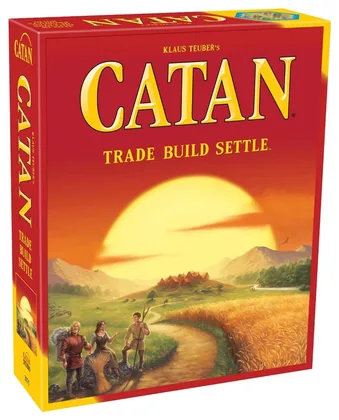 Catan
Catan
|
ANOTHER WAY TO PLAY
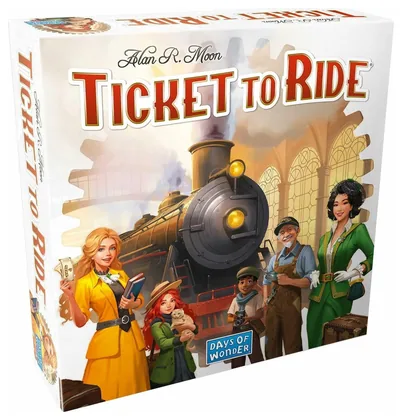 Ticket to Ride
|
ANOTHER WAY TO PLAY
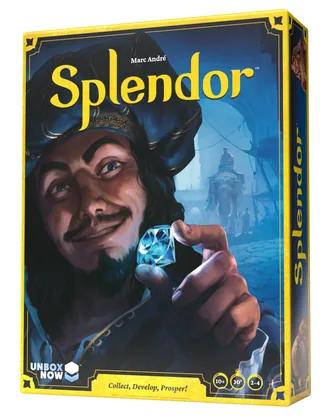 Splendor
|
ANOTHER WAY TO PLAY
 Jaipur
|
|---|---|---|---|---|
| Why consider it | This game Trade wheat for brick, build roads, and race to ten points. | A different fit Another family classic, with no trading and less dice luck; plays 2–5 | A different fit The same build-up-your-economy feeling in 30 minutes, and it works with 2 | A different fit A trading-and-collecting card game for exactly two, for when Catan's three-player minimum is a problem |
| Players | 3–4 | 2–5 | 2–4 | 2 |
| Best with | 4 | 4 | 2-3 | 2 |
| Play time | 60–90 min | 30–60 min | 30 min | 30 min |
| Age | 10+ | 8+ | 10+ | 10+ |
| Rules | Medium | Easy | Easy | Easy |
| Indian edition | Available | Imported | Imported | Available |
| On this page | Explore Ticket to Ride | Explore Splendor | Explore Jaipur |
More from Funskool
Also made or sold in India by Funskool.
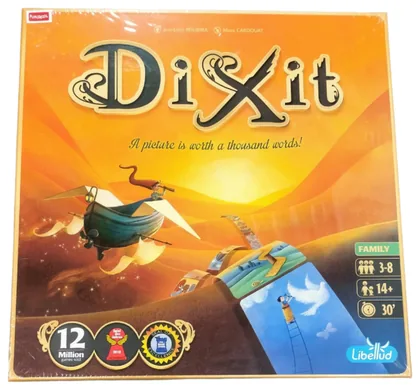
Dixit
Give a clue for a dreamlike picture, but not too obvious
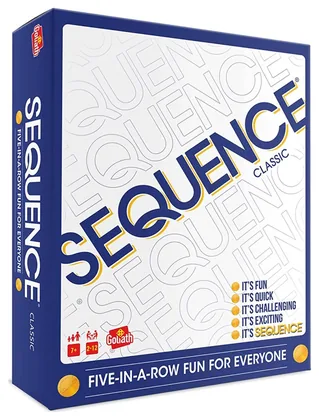
Sequence
Play a card, claim its space, and make five in a row.
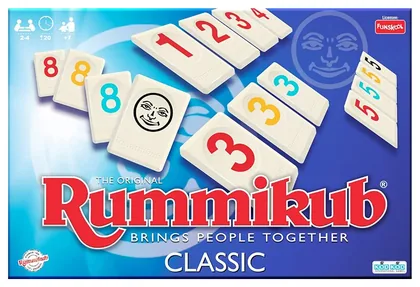
Rummikub
Rummy with tiles: build runs and groups, then rearrange the table
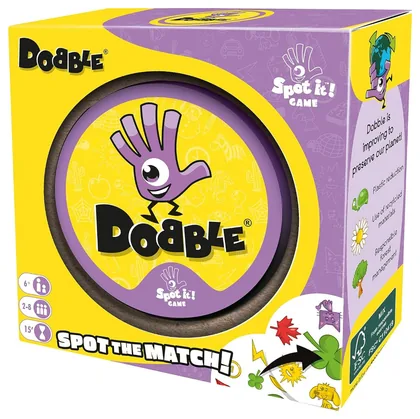
Dobble
Race to spot the one picture any two cards share
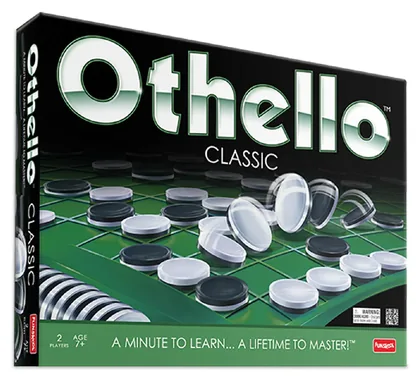
Othello
Trap a line of discs, flip them to your colour
Games with a similar feel
Different games. A familiar kind of fun.

Business
India's own property game: buy cities, collect rent, build hotels
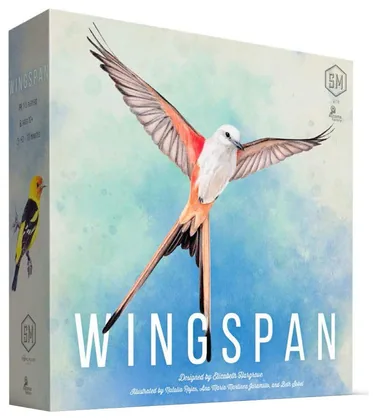
Wingspan
Calm card game about birds where every new bird boosts your turns.
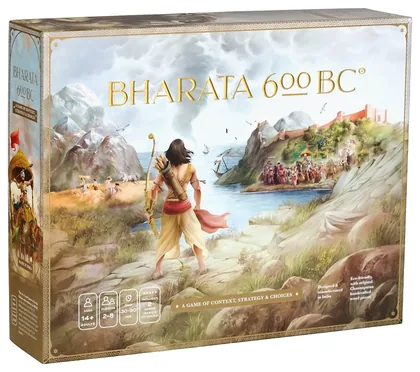
Bharata 600 BC
Build an ancient Indian kingdom; dice-free battles, handmade Channapatna pieces.
Ticket to Ride
Collect coloured cards and claim railway routes across America.
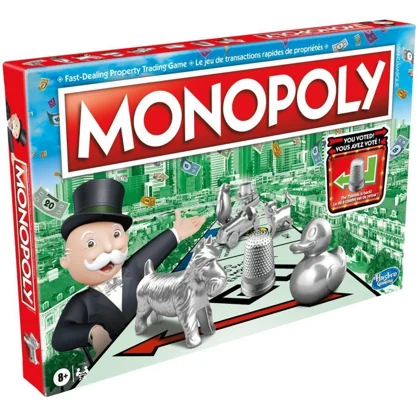
Monopoly
Roll, buy property, collect rent, and bankrupt everyone else
Also playable with two
For game nights with two players.
Wingspan
Calm card game about birds where every new bird boosts your turns.
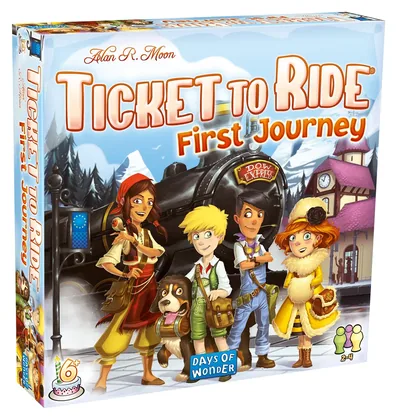
Ticket to Ride: First Journey
A shorter, simpler Ticket to Ride made for children six and up
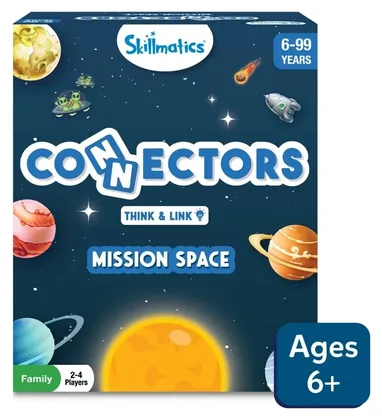
Connectors: Mission Space
Link picture tiles into a path through planets and galaxies
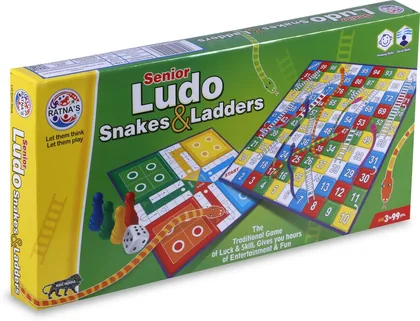
Snakes and Ladders
Climb the ladders, dodge the snakes, first to 100 wins
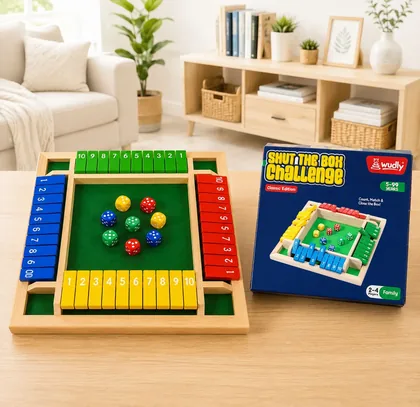
Shut the Box
Roll two dice, flip down the tiles, leave the smallest total
Questions people ask about Catan
Is Catan available in India?
Yes. Funskool has made and sold an official licensed edition in India since 2024, and imported editions are sold here too.
Can 2 people play Catan?
Not with the base box alone: it is designed for 3 or 4. The Traders & Barbarians expansion includes an official two-player variant, and Rivals for Catan is a separate two-player game set in the same world. Both are imports in India.
Can 5 or 6 people play Catan?
Only with the 5–6 player extension, which adds extra tiles and pieces and is sold separately. In India it is an import, so check that it matches your base game's edition before you buy.
Is Funskool's Catan the real game?
Yes. catan.com lists Funskool as the official Catan partner for India, and Funskool makes the game under licence from Asmodee. The rules are the standard Catan rules.
Game facts
- Designed by
- Klaus Teuber
- Publisher
- Kosmos / Catan Studio (Asmodee); made in India under licence by Funskool
- In India
- Funskool (India) Ltd – licensed to manufacture and distribute Catan in India since August 2024; listed on catan.com as the official India partner
- First published
- 1995
- Players
- 3–4
- Language
- Little reading – Resource cards are picture-only. Development cards and the rulebook are in English, but the text is short, so a table that mixes Hindi, English or any other language can play once one person has explained the rules.
- Box size and weight
- 30 × 24 × 8 cm, 1.37 kg
- Awards
- Spiel des Jahres (Germany's Game of the Year), 1995 (Winner); Deutscher Spiele Preis, 1995 (1st place); Origins Award, Best Fantasy or Science Fiction Board Game, 1996 (Winner); Origins Hall of Fame, 2001 (Inducted); Games Magazine Hall of Fame, 2006 (Inducted)
Sources & photo creditsThe references behind this guide.
Facts on this page come from the publisher, the Indian maker or distributor, and the sources below. Photos are credited under each one.
- Catan – Wikipedia
- CATAN – The Game (catan.com)
- CATAN – Our Partners (catan.com)
- Funskool India secures rights to manufacture and distribute CATAN – Indian Retailer (Aug 2024)
- Funskool manufactures Catan board game in India – Northlines
- Funskool secures rights from Asmodee to introduce Catan in India – India Retailing
- CATAN 6th Edition announcement – Nerdist
- Catan: Traders & Barbarians – Wikipedia
- The Rivals for Catan – Wikipedia
- Catan Game – Funskool
- Funskool Catan Trade Build Settle – Toycra
- Catan Studio products – Board Games India