





Card game
7 Wonders
Build an ancient city by picking one card and passing the rest.
- Set-up
- About 10 min
- Reading
- Little
The quick verdict
Full verdict ↓Great for Groups of five to seven who want a real strategy game without long waits between turns
Think twice if You usually play as two – the base game needs at least three, and 7 Wonders Duel is the two-player version
How we rate it
Learning curve. Our anchor for 4, alongside Wingspan. Each turn is simple (pick a card, use it), but there are many icons and seven ways to score, so the first game is slow.
Luck & skill. Which cards you are dealt and passed adds some luck, but reading your neighbours and planning what to build decides most games.
Interaction. You only deal with your two neighbours: you buy resources from them, compare armies with them and watch which cards you pass them. Nobody can attack your city directly.
Set-up. First game: about 20 minutes to punch out the coins and tokens and sort the cards. After that, about 10 minutes: split the cards into the three Ages, put back the cards marked for more players than you have, draw guild cards (players + 2) into Age III, and give everyone a Wonder board and 3 coins.
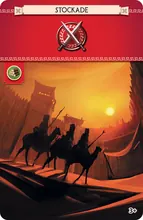
Reading. Card effects are icons; the only words on cards are building names. In the first games players check the Description of Effects sheets to learn what the icons mean.
Learning curve: 1 = UNO or Connect 4; 3 = Catan; 5 = a heavy strategy game. These describe the experience, not an overall score.
Paid link · We may earn a commission, at no extra cost to you.
Is 7 Wonders right for you?
Great if
- Groups of five to seven who want a real strategy game without long waits between turns
- Families with teenagers who are ready for something deeper than Monopoly
- Players who enjoy building something over the game and watching it pay off at the end
- Tables where people speak different languages, once everyone has learnt the icons
Skip it if
- You usually play as two – the base game needs at least three, and 7 Wonders Duel is the two-player version
- Your group wants chatter, bluffing or deal-making – play is quiet, and you mostly deal with your two neighbours
- First-timers who dislike icon-heavy cards – expect to check the effects sheet often in your first game
A place on the honours list
Good company to be in.
Recognition from beyond our table.

Kennerspiel des Jahres
The German jury’s award for games with a little more depth.
Meet the jury’s choice ↗More recognition 1
Deutscher Spiele Preis (German Game Prize), 2011 (Winner (1st place))
How 7 Wonders plays
Each player gets a Wonder board for one of seven ancient cities, such as Babylon, Olympia or the Colossus of Rhodes. The board gives you a starting resource and shows two to four Wonder stages you can build, with a Day side and a harder Night side. Everyone starts with 3 coins.
- Time to teach: about 15 minutes.
- Reading and language: Card effects are shown as icons, not sentences, and every colour also has its own symbol for colour-blind players. Card names and the rulebook are in English, and the box includes Description of Effects sheets that explain each icon. Once players learn the symbols, nobody needs to read during play.
7 WONDERS TUTORIAL VIDEO | Learn how to play 7 Wonders in 10 minutes! · Repos Production · Official
Choose a video · Watch right here
If this creator doesn’t allow embedded playback, watch on YouTube ↗.
A turn, step by step
- 1Pick
Everyone looks at their hand, secretly picks one card and puts it face down. Then all players reveal at the same time, so nobody waits for a turn.
- 2Play
Build the card by paying its cost (buy a missing resource from a neighbour for 2 coins, or build it free if you own the card it chains from). Or tuck it under your board to build the next Wonder stage, or discard it for 3 coins.
- 3Pass
Pass the rest of your hand to your neighbour: left in Ages I and III, right in Age II. After six turns, compare military strength with both neighbours and take victory or defeat tokens.
- 4Win
After Age III, add up points from your Wonder, coins, military tokens, buildings and science. The highest total wins; a tie goes to the player with more coins.
The full explanation: how a game of 7 Wonders goes
The game has three rounds, called Ages. At the start of each Age everyone is dealt seven cards. You all secretly choose one card, reveal at the same time and pass the rest of your hand to a neighbour: to the left in Ages I and III, to the right in Age II. On the sixth turn you get two cards; you play one and discard the other.
With the card you picked you do one of three things: build it, tuck it under your board to complete the next stage of your Wonder, or sell it for 3 coins. If you lack a resource you can buy it from a neighbour for 2 coins. Some later buildings are free if you already built the earlier building they chain from.
The card colours point to different plans. Brown and grey cards give resources, blue cards give points, yellow cards give coins and trading perks, red cards add military strength, green cards give science symbols, and purple guilds in Age III score in special ways. At the end of each Age you compare military strength with both neighbours and take victory or defeat tokens.
After Age III you add up points for your Wonder, coins (1 point per 3 coins), military tokens and your blue, yellow, green and purple cards. Science scores both for sets of the same symbol and for sets of three different symbols. The highest total wins; if there's a tie, the player with more coins wins.
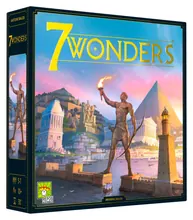
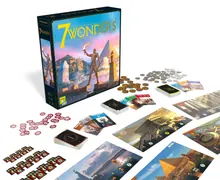
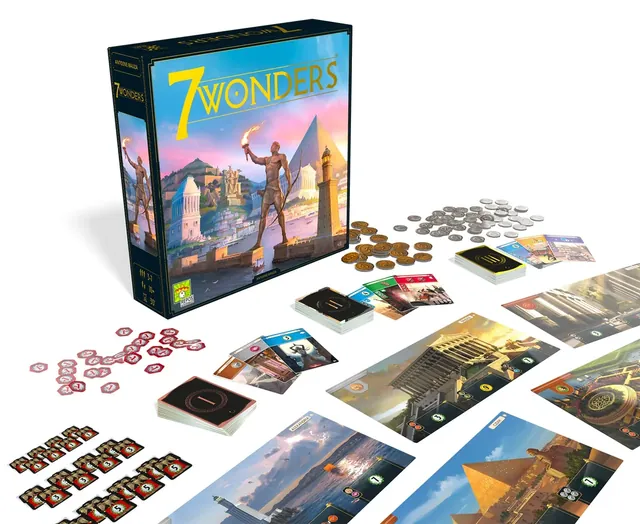
What's in the box
- 7Wonder boards
double-sided: an easier Day side and a Night side - 148Age cards
49 for Age I, 49 for Age II and 50 for Age III - 78Coins
54 worth 1 and 24 worth 3 - 48Military Conflict tokens
24 Defeat tokens (-1) and 24 Victory tokens: 8 each of +1, +3 and +5, one value per Age - 1Score pad
- 3Description of Effects sheets
explain every icon in the game - 1List of cards and chains sheet
- 1Rulebook
8 pages, English
Box: 29.8 × 29.8 × 7.6 cm, 1.28 kg. Handy to know for gifting and travel.
From the contents list on page 2 of Repos Production's English second-edition rulebook (SEV-EN02, (c) 2020), which is the edition sold in India (SKU SV01EN). It matches the count check already on our basic page. The 2020 edition is for 3 to 7 players only; the first edition's two-player variant was dropped. Not checked against a physical box sold in India.
Where to buy
Paid link · We may earn a commission, at no extra cost to you.
How to make sure you get a genuine copyEditions and the details worth checking.
What reviewers and players say
Reviewers call 7 Wonders a modern classic. Everyone plays at the same time, so even seven players finish in about half an hour, and there are many ways to score. The 2020 second edition is praised for bigger Wonder boards, cleaner cards, a better insert and new icon reference sheets, while the game itself is almost unchanged. The main catch is the first game: there are lots of icons to learn and seven scoring categories. Some players also find it quiet, because you mostly deal with your two neighbours, and there is no two-player mode (that is what 7 Wonders Duel is for).
What people love
- Everyone picks and plays at the same time, so there's almost no waiting, even with seven players
- Many ways to win: science, military, Wonders, trade or blue-card points
- The second edition looks and handles better: larger Wonder boards, shiny Age card backs, a tidy insert and icon reference sheets
- Once the icons are learned there's almost nothing to read, so mixed-language groups can play together
Common complaints
- The first game is slow: many icons to learn and a long scoring sheet
- You only really deal with your two neighbours, so it can feel like everyone is playing alone
- No two-player mode in the second edition, and expansions must match the edition you own
Based on 7 reviews and discussions
- Review Review - 7 Wonders: Second Edition (Derek Thompson, October 2020) · Geeks Under Grace
- Review Remastering A Classic: 7 Wonders 2nd Edition (Matt Miller, September 2020) · Game Informer
- Review 7 Wonders Review - A Monumental Design (Kurt Refling, August 2020) · Meeple Mountain
- Players What are the must have expansions? (forum thread, August-September 2026) · BoardGameGeek forums
- Players Preliminary review on the balance changes of the 2nd edition (forum thread, September 2020 onwards) · BoardGameGeek forums
- Award 7 Wonders - Kennerspiel des Jahres 2011, jury statement · Spiel des Jahres
- Reference 7 Wonders (board game) · Wikipedia
Summarised in our own words from the sources above. We don't use Amazon reviews or ratings.
More like 7 Wonders
Which game is the best fit?
Our picks if 7 Wonders isn't quite right.
Swipe to compare every game
| Compare the games.The details that make a difference. |
YOU’RE VIEWING
 7 Wonders
|
ANOTHER WAY TO PLAY
 7 Wonders Duel
|
ANOTHER WAY TO PLAY
 Sushi Go!
|
ANOTHER WAY TO PLAY
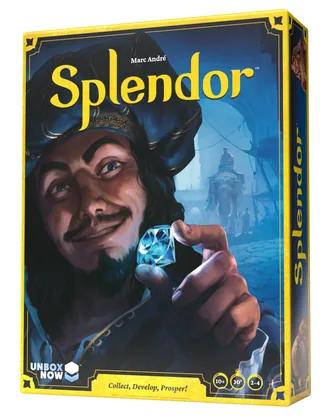 Splendor
|
|---|---|---|---|---|
| Why consider it | This game Build an ancient city by picking one card and passing the rest. | A different fit The two-player spin-off, which uses a card pyramid instead of passing hands | A different fit The same pick-one-and-pass idea in a much shorter, lighter card game | A different fit Another engine-builder in which early cards make later ones cheaper |
| Players | 3–7 | 2 | 2–5 | 2–4 |
| Best with | 4-7 | 2 | 3-5 | 2-3 |
| Play time | 30 min | 20–30 min | 15–20 min | 30 min |
| Age | 10+ | 10+ | 8+ | 10+ |
| Rules | Medium | Medium | Easy | Easy |
| Indian edition | Imported | Imported | Imported | Imported |
| On this page | Explore 7 Wonders Duel | Explore Sushi Go! | Explore Splendor |
More by Antoine Bauza
Another way into their collection.
More from Repos Production
Another way into their collection.

More pick-and-pass games
Different games. A familiar kind of fun.
7 Wonders Duel
The 7 Wonders civilisation race, rebuilt as a tense 30-minute duel
Sushi Go!
Pick a dish, pass the rest, build the best sushi meal
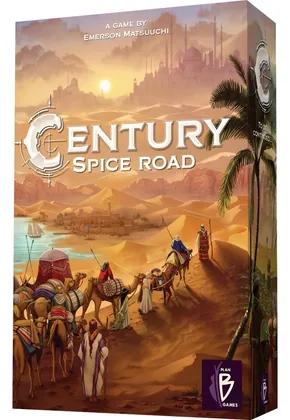
Century: Spice Road
Trade turmeric, saffron, cardamom and cinnamon in a quick card game

Azul
Draft colourful tiles and build the best-scoring palace wall
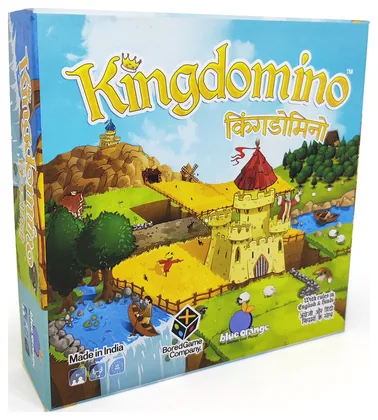
Kingdomino
Build a tiny kingdom from land dominoes in twenty minutes
Also playable with two
For game nights with two players.
7 Wonders Duel
The 7 Wonders civilisation race, rebuilt as a tense 30-minute duel
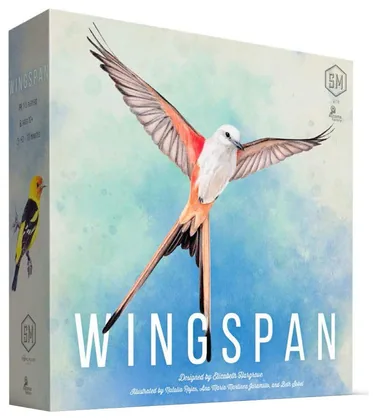
Wingspan
Calm card game about birds where every new bird boosts your turns.
Splendor
A quick gem-trading race where every card makes the next easier.
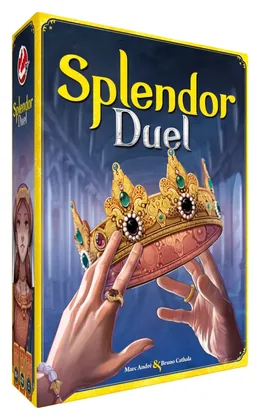
Splendor Duel
Splendor rebuilt for two: gem lines, card powers, three ways to win
Century: Spice Road
Trade turmeric, saffron, cardamom and cinnamon in a quick card game
Questions people ask about 7 Wonders
Can 7 Wonders be played with 2 players?
The current second-edition base game is for 3 to 7 players. For two, buy 7 Wonders Duel, a separate game designed for exactly two.
Should I buy 7 Wonders or 7 Wonders Duel?
It depends on how many people usually play. 7 Wonders works from three up to seven players and shines with bigger groups, while Duel is only for two. Many couples own Duel; families and friend groups usually get more out of the original.
What is the difference between the first and second edition of 7 Wonders?
The 2020 second edition has updated art, tweaked card costs, changes to some Wonder boards and one changed guild. The way you play is the same. Its expansions were reworked too, so match your expansions to your edition.
Is 7 Wonders too hard for children?
The box says 10 and up. The turns are simple, but there are many icons to learn and several ways to score, so the first game takes a while. For younger children, 7 Wonders Architects is a lighter game from the same family.
Game facts
- Designed by
- Antoine Bauza
- Publisher
- Repos Production (Asmodee)
- First published
- 2010
- Players
- 3–7
- Barcode
- 5425016924006
- Language
- Little reading – Card effects are shown as icons, not sentences, and every colour also has its own symbol for colour-blind players. Card names and the rulebook are in English, and the box includes Description of Effects sheets that explain each icon. Once players learn the symbols, nobody needs to read during play.
- Box size and weight
- 29.8 × 29.8 × 7.6 cm, 1.28 kg
- Awards
- Kennerspiel des Jahres (Germany's Connoisseur Game of the Year), 2011 (Winner); Deutscher Spiele Preis (German Game Prize), 2011 (Winner (1st place))
Sources & photo creditsThe references behind this guide.
Facts on this page come from the publisher, the Indian maker or distributor, and the sources below. Photos are credited under each one.
- Repos Production – 7 Wonders (official game page)
- Repos Production – 7 Wonders English rules, second edition (PDF)
- Wikipedia – 7 Wonders (board game)
- Bored Game Company – 7 Wonders
- Bored Game Company – 7 Wonders Duel
- Gameistry – 7 Wonders (Second Edition)
- Gameistry – 7 Wonders Duel
- Gameistry – 7 Wonders: Architects